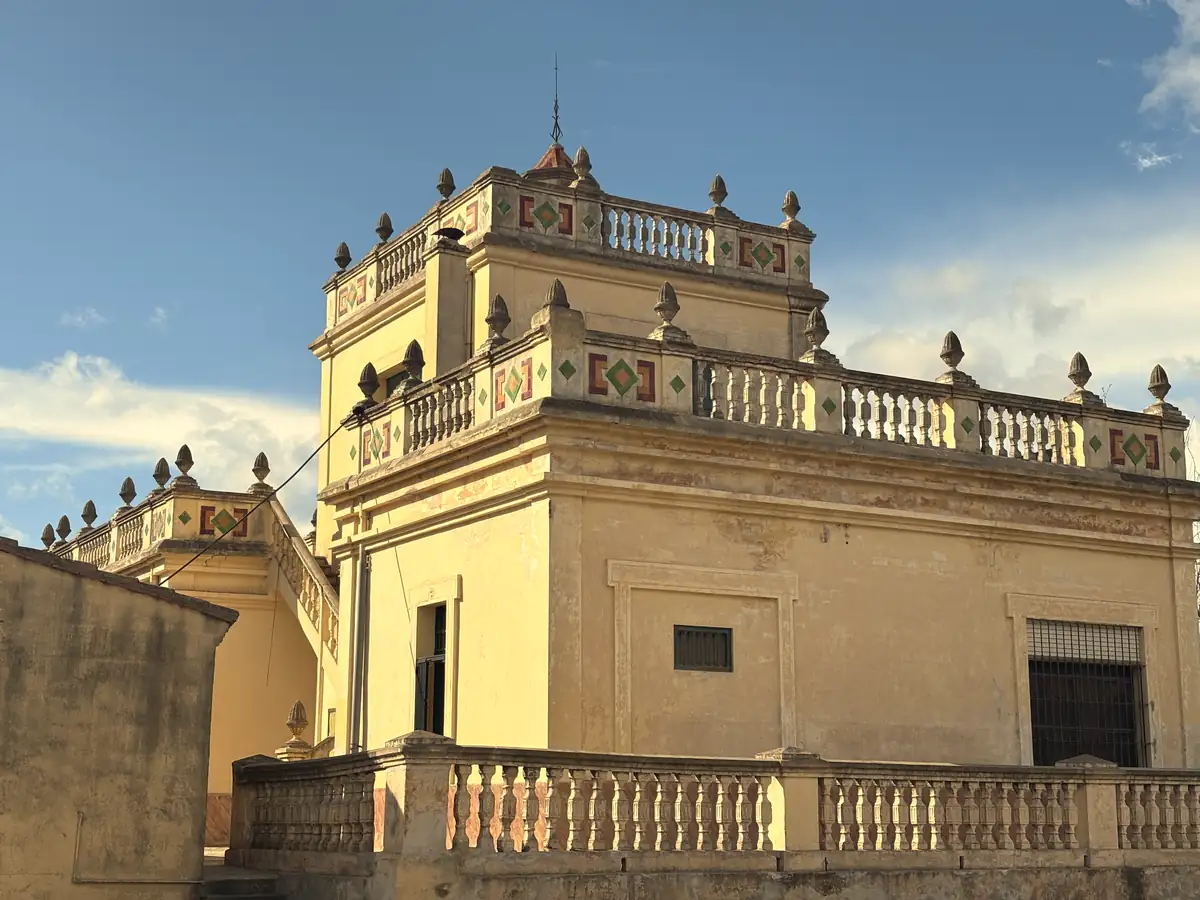

An old farmhouse among the orange groves. A pool, a view of the mountains, a lemon tree by the kitchen door, and Valencia city 35 minutes away. For plenty of buyers, a country house is the reason they started looking at this region in the first place.
The photos show the pool. The risk is in the paperwork.
Over the decades, many houses in the Valencian countryside were built, extended or given a pool without a full licence. So many, in fact, that the regional government created a special procedure to regularise them. Some of those houses are perfectly fine to buy. Others cannot get a mortgage, cannot be rented out, or can never be legalised at all. From the outside, they look exactly the same.
In short, a finca near Valencia can be a very good buy, as long as you check the land, the house and the water before you sign, not after. This guide explains what to check, and why.
What a finca really is
In Spanish, finca simply means a property. Legally, even a flat in the city is a finca, and that is how you will see the word on a nota simple. Among international buyers, it has come to mean a country house with land, and that is how we use it in this guide. What matters is the land it stands on. Most country houses around Valencia, outside the villages and urbanisations, sit on suelo no urbanizable, often called suelo rústico: rural land that is meant for farming and nature, not for housing.
That has two big consequences for a buyer.
- Building a new house is the exception, not the rule. Under the Valencian planning law (TRLOTUP, article 211), a new detached house on common rural land needs a plot of at least one hectare (10,000 m²), and the building may cover no more than 2% of it. The town’s own plan can be stricter, and on protected land a new house is usually not allowed at all.
- What you see is not always what you can keep. A house of 250 m² on a plot of 4,000 m² could not be built under today’s rules. That does not make it illegal: it may have been built with a licence under older rules, or it may have been regularised. But it does mean you need to know which of the two it is.
The same goes for everything around the house: a new extension, a garage, a pool or a guest house needs its own permission, and on rural land that permission is often hard to get.
Is the house legal?
This is the most important question, and the one a listing cannot answer for you. Even if it says “fully legal”, always check it yourself. You find the answer by putting three things side by side.
- The nota simple from the Land Registry (Registro de la Propiedad). It shows who owns the property, any debts on it, and what has been registered: the plot, and ideally the house, with its size. What it does not tell you is whether the house was ever built with a licence.
- The catastro, the tax register. It shows the plot, the buildings and their surface area as the tax office knows them.
- The property itself. What is actually there: the house, the extension, the pool, the guest house, the covered terrace.
If all three match, that is a good start. If they do not, you need to find out why before you make an offer. Common examples: the house is in the catastro but was never registered in the Land Registry, the house is bigger than both registers say, or the pool and guest house appear nowhere.
Why the date matters
The Valencian rules on unlicensed building have become much stricter. Until 2014, the authorities had four years to act against a house built without a licence. In 2014 that became 15 years, and since 2019 there is no time limit at all on rural land. Which rule applies depends on when the work was finished. On common rural land, houses finished before 20 August 2010 are generally beyond the reach of a demolition order. That does not make them legal, and for anything more recent, or on protected land, a lawyer has to check.
There is also a way back for some houses:
- Houses completed before 20 August 2014 can in many cases be regularised through a procedure called minimización del impacto territorial. The owner pays for the required works, such as access, sewage treatment and water supply, and has four years to complete them. For houses on protected land, in flood zones, or near the coast, a river or a main road, the authority concerned must first give a binding report, and a negative report ends the procedure.
A house that is not legal and cannot be regularised is fuera de ordenación: you can live in it, but you cannot extend or renovate it freely, it is hard to get an occupancy certificate, and most banks will not lend on it. That last point matters even if you pay cash, because the next buyer may need a mortgage.
Water: where does it come from?
In town, water comes from the tap. In the countryside, you have to ask. A country house can get its water in three ways, and many use a mix.
- Mains water. Some rural areas are connected to the town’s drinking water network, others are not. Ask for a recent water bill.
- A private well. A well can be a real asset, but only if it is legal. The owner of a plot may use up to 7,000 m³ of groundwater a year, on that plot only, if the well is registered with the river basin authority, the Confederación Hidrográfica del Júcar, and has a water meter. Ask for the registration. Well water is also not automatically drinking water: have it tested.
- Irrigation water. In the Ribera and around Valencia, orchards are often watered through the old network of acequias, managed by a local irrigation community (comunidad de regantes). The right to that water belongs to the land. Ask whether the plot has it, what the yearly fee is, and when your turn to irrigate comes. Also ask the irrigation community for proof that the current owner has paid all fees: unpaid fees can mean no water until they are settled.
An orange grove without water is not an orange grove for long. And a house without a reliable water supply is a very different purchase from the one in the photos.
Looking for a finca near Valencia? We help you find the right one and check the registers, the permits and the water before you make an offer. Book a free call and we will explain how we work.
Access, power, sewage and internet
These are the things you only notice after a week of living there. Check them on the viewing, not after the purchase.
- Access. Is the road to the house a public road, or does it cross a neighbour’s land? If it crosses private land, the right of way should be in writing, ideally in the Land Registry. Also ask what the track is like after heavy rain.
- Electricity. Is the house on the grid, or does it run on solar panels and a generator? A new grid connection in the countryside can be slow and expensive, and for a house that is not fully legal it can be refused.
- Sewage. Most country houses have no mains sewer, but a septic tank or small treatment unit. Ask how old it is, when it was last emptied, and whether it meets current rules. In a regularisation, an approved system is usually one of the required works.
- Internet. Fibre often stops at the edge of the village. Check the mobile signal at the house itself, not in the village, and ask what the current owner uses. Many rural homes now rely on 4G, 5G or satellite internet, which works well if you know it in advance.
Can you rent it out to tourists?
Many listings mention “rental potential”. Treat that as a question, not a fact.
Since August 2024 (Decreto-ley 9/2024, a regional decree also published in Spain’s official state gazette, the BOE), holiday rentals in the Valencian Community have become much stricter. A tourist rental must be registered with the regional tourism register, the registration is valid for five years, and the town hall can require a report confirming that tourist use is allowed at that address. For a house on rural land there is an extra hurdle: on top of the town hall’s report, it needs a special land-use permit, the Declaración de Interés Comunitario (DIC), or proof that it is exempt.
In practice, the answer differs from town to town. In one town where we work, the town hall told us that tourist licences for rural homes are not possible at the moment. In another town, the answer can be different, but a house on rural land always needs the DIC described above. If renting out is part of your plan, ask the town hall for its urban compatibility report (informe de compatibilidad urbanística) before you make an offer, and never rely on the licence number of the current owner without checking it.
The costs a listing does not show
The purchase costs are the same as for any resale home in the region: the transfer tax (ITP), notary, Land Registry and a lawyer. Our guide to the buying process explains them step by step. A country house adds a few costs of its own.
- A technical check. For a house on rural land, a short visit by a building surveyor (arquitecto técnico) or architect before you sign is money well spent. They compare what is built with what is registered and tell you what regularising the difference would involve.
- Regularisation. If the house or part of it has to be legalised, the owner pays for the procedure and the required works. Agree before you sign who pays for what, and put it in the contract.
- The land. An orchard needs pruning, irrigating and harvesting. Many owners pay a local farmer to do it, sometimes in exchange for the harvest. Ask how it is done now.
- Running costs. Irrigation fees, emptying the septic tank, pool maintenance, and insurance for a detached house. Property tax (IBI) on rural land is usually low, but the house itself is taxed separately.
None of these costs is a reason not to buy. They are a reason to know the total before you make an offer.
Seven questions to ask before you make an offer
- Can I see the nota simple and the catastro record? Do they match each other, and do they match what is built?
- When was the house finished, and is there a licence or an occupancy certificate?
- Were the pool, extension or guest house built with a permit?
- Where does the water come from? If there is a well, is it registered? And does the land have irrigation rights?
- How do you reach the house? Is the access road public, or is there a registered right of way?
- What is the sewage system, and how old is it?
- If I want to rent it out, what does the town hall say? Ask for the compatibility report.
Most fincas in Spain are sold through an agent who works for the seller. That agent is paid by the seller, usually a percentage of the price, and only when the sale goes through. How agents in Spain earn their money explains what that means for you. A missing permit or an unregistered well is not something the seller’s side has any reason to bring up. So ask these questions yourself, or have them asked by someone who is paid by you, not by the seller.
A finca can be a great buy, if you check it first
I live in the Ribera myself, a short walk from the orange groves. Many of the fincas I visit here are every bit as beautiful as they look in the photos. But I also know how much of what makes a finca work is invisible on a viewing: the paperwork, the water, the road after a storm.
That is what we check for you. We are a buyer’s agency: we search, check and negotiate for you, and you pay our fee, not the seller (here is how we are paid). So we look at a country house the way you would if you knew the region: the registers, the permits and the water supply. And if a house is not what it seems, we tell you before you are committed, not after.
Looking for a finca near Valencia? We search for you, identify the right home, check it before you make an offer and negotiate the price. Book a free call and tell us what kind of life you have in mind. We will explain how we work and what it costs. Already have a finca in mind? Send us the listing and we can start from there.
Frequently asked questions
Can foreigners buy a finca in Spain?
Yes. Apart from rare cases near military zones, where buyers from outside the EU need permission, the rules are the same as for Spanish buyers. You need an NIE (foreigner’s tax number) and, in practice, a Spanish bank account.
What is suelo rústico?
It is rural land, officially suelo no urbanizable in the Valencian Community: land meant for farming and nature. Building on it is heavily restricted. A new house needs at least one hectare, and the building may cover no more than 2% of the plot.
Can I add a pool or an extension to a country house?
Only with a permit from the town hall, and on rural land that permit is often hard to get. Always check what is allowed before you buy, not after.
What about an above-ground pool?
It is a question we often get. A pool that simply stands on the ground, without foundations, is treated differently from a built pool, and may not need a building permit. But the rules differ from town to town, and anything that adds construction, such as a concrete base or a deck, may need one. Ask the town hall before you buy one.
Can I turn the old irrigation reservoir into a pool?
Many country houses have a balsa, an open water reservoir built to irrigate the land. Keeping it and using it for the orchard is usually fine. Turning it into a swimming pool is a change of use, and on rural land that needs a permit like any other pool.
Can an unlicensed country house be legalised?
Sometimes. Houses finished before 20 August 2014 can in many cases be regularised through the minimización del impacto territorial procedure, at the owner’s cost. For houses on protected land, in flood zones, or near the coast, a river or a main road, the authority concerned must first give a binding report, and a negative report ends the procedure.
Can I get a mortgage on a finca?
Most banks only lend on a house that is registered and legal. Read more in our guide to mortgages for non-residents.