
Over the years, I have spoken with many buyers who came to Valencia with the same picture in mind: a piece of land, anywhere from a few thousand square meters to several hectares, their own vegetables and eggs, oranges from their own trees, solar panels on the roof and water from their own well. Some were ready to sell everything at home for a self-sufficient life near Valencia.
The climate makes that dream possible here. But in my experience, most buyers fall for the house first and look at the land last, and that is the wrong way around. What decides whether your plan works is less visible: who owns the water, which animals you may keep, what you are allowed to build, and whether the house itself is legal. From the outside, a plot that can carry your plans and one that cannot look exactly the same.
So how do you tell them apart? By checking five things before you make an offer: the type of land, the water, the energy, the rules for animals and buildings, and the legal status of the house. This guide explains each one, with the official rules behind it.
Why the Valencia Region Works for Self-Sufficient Living
Valencia is more than the city. Most people picture paella, the beach and the City of Arts and Sciences. But drive half an hour out of town and you are among rice fields and orange groves. An hour inland, you reach vineyards, almond terraces and mountain villages where homes and land cost far less than in the city.
That is all still Valencia: the province around the city. The province is part of the wider Valencian Community (Comunitat Valenciana), the region that also includes Alicante and Castellón, and whose rules apply throughout this guide.
The climate does much of the work. In the city, the sun shines about 2,700 hours a year, the average temperature is around 18 °C and frost is rare, so vegetables grow almost all year round (AEMET long-term averages). Inland, in areas such as Requena-Utiel, winters are colder and frost is more common, which changes what you can grow.
The limiting factor is water. Valencia gets only about 475 mm of rain a year, much of it in a few heavy autumn storms, and summers are long, hot and dry. That is why the next two questions matter more than any other.
Dry Land or Irrigated Land: The First Thing to Check
In Spain, farmland is described either as secano (dry land, watered only by rain) or as regadío (irrigated land, with a right to irrigation water). You often find this in the nota simple from the Land Registry and in the cadastral record (catastro). But the description can be outdated, so ask the irrigation community whether the plot really has water rights. For anyone who wants to grow food, it is one of the first things to check.
Dry land: suits olives, almonds and carob trees, which live on rainwater. A vegetable garden on dry land needs water from somewhere else: a well, a storage tank or the mains.
Irrigated land: usually comes with a share in the local irrigation network, the centuries-old acequias, run by an irrigation community (comunidad de regantes). You pay a yearly fee and get your turn to water. Irrigated land can grow far more than dry land, which makes those water rights valuable.
A listing that says “orange grove” does not tell you whether those trees have water rights. Ask for the nota simple, and ask the irrigation community.
Water: Wells, Rain and Irrigation Rights
Water is the backbone of self-sufficient living, and in Spain it is closely regulated.
A well: the owner of a plot may use up to 7 million liters of groundwater a year (about 1.8 million US gallons), on that plot only, as long as the well is registered with the river basin authority and has a water meter (Spanish Water Act, art. 54.2). The limit applies to all wells on the plot together, and in areas where groundwater is overused, a new well needs a permit.
Around Valencia, the river basin authority is the Confederación Hidrográfica del Júcar. An unregistered well is a risk, not an asset, and well water is not automatically drinking water: have it tested.
Rainwater: rain that falls on your land is yours to collect, and you may build tanks to store it (Civil Code, art. 416). For larger systems, check with the river basin authority whether you need to register the use. With so little rain, a good storage tank makes a real difference in the dry months.
Irrigation water: if the plot has irrigation rights, ask the irrigation community for proof that the fees are paid, and when your turn comes. Unpaid fees can mean no water until they are settled.
Our guide to buying a country house in Valencia explains how to check all of this before you sign.
Living Off the Grid: What the Rules Say About Solar
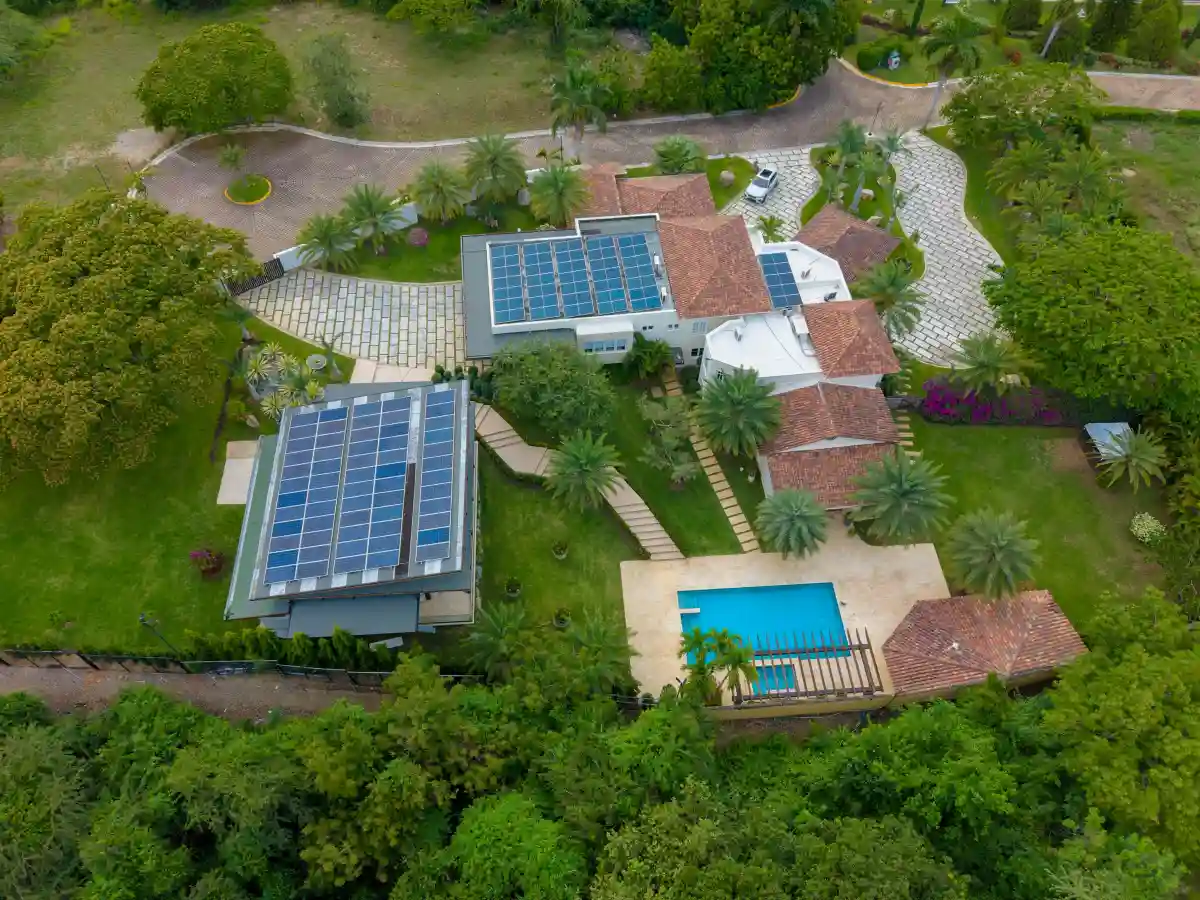
Many country houses near Valencia already run on solar panels, sometimes because the grid never reached them. Living fully off the grid is legal, and simpler than many buyers expect.
A system that is not connected to the grid falls outside the Spanish rules for self-consumption with the grid (Royal Decree 244/2019, art. 2.2), so you need no grid contract. It must still be installed by an authorized installer, who registers a certificate with the regional government, as for any electrical installation (Low Voltage Regulation, art. 18).
For panels on an existing, legal house in the countryside, a simple notice to the town hall, a declaración responsable, is enough (Decree-law 14/2020, art. 18). Panels on the ground next to the house are a different case and may need a full building license: ask the town hall.
The catch is the house itself. If it was built without a license, the panels cannot simply be approved; they can only be legalized as part of a wider procedure to regularize the house. Being off the grid does not make a house legal. It only means no one ever connected it.
Keeping Animals: What You May Keep and What You Must Register
My neighbor keeps a small flock of chickens, and every now and then a few of his eggs find their way to my kitchen. I once asked him what he does when he has to travel for a few days. His answer surprised me: an automatic feeder and water system, so the hens are fine on their own for several days. Not being able to leave the animals had always held me back, and now I am seriously thinking about keeping a few hens myself. The eggs, by the way, are far better than anything from the supermarket.
Keeping animals for your own use is allowed on rural land, but almost every animal has to be registered in the national livestock register (REGA), even a small flock.
| Animal | For your own use | What you must do |
|---|---|---|
| Chickens | Up to about 30 laying hens; never sell eggs or meat | Report to REGA and name a vet (RD 637/2021) |
| Goats and sheep | A few animals | Register in REGA; ear tag and electronic tag for each animal (RD 787/2023) |
| Horse | One or more | Register in REGA; microchip by a vet and an equine passport |
| Pigs | Up to 3 fattening pigs a year (5 outdoors), no breeding sows | Register in REGA and get prior approval (RD 306/2020) |
How far your animals must be from your neighbors’ homes is not set by one regional rule. It depends on the town’s planning rules and local bylaws, so if the plot has houses nearby, ask the town hall before you buy. And during bird flu outbreaks, the authorities can also order all poultry, including small flocks, to be kept indoors.
Sheds, Greenhouses and Stables on Rural Land
Most country houses near Valencia stand on rural land (suelo no urbanizable), where building a new house is the exception. For farm buildings, the rules are more open: a greenhouse, a tool shed or a shelter for animals is allowed, as long as it serves the farming use of the plot (Valencian planning law, TRLOTUP, art. 211).
There are three conditions. At least half of the plot must stay free of buildings, although greenhouses do not count toward that. The building may not have a kitchen, a bathroom or a bedroom. And you need a building license from the town hall, which first asks the regional agriculture department for a report. Unlike a house, a farm building needs no minimum plot size, but your town’s plan sets the maximum size.
In other words: a shed for your tools, yes. A shed that quietly becomes a guest room, no. That is how many unlicensed extensions in the Valencian countryside begin.
Fire, Drought and Floods: The Other Side of the Climate
The same sun that grows your food also dries out the land, and three risks come with it.
Fire: within 500 meters of forest land, the so-called forest influence zone (zona de influencia forestal), you may not light a fire without permission (Valencian Forestry Act, art. 57).
Burning garden and pruning waste is, as a rule, no longer allowed in Spain (Waste Act, art. 27.3). Exceptions need a permit or a notice through the town hall. Where I live, in the Ribera Alta region, the town hall makes it easy to get a permit to burn garden waste in autumn and winter.
Many towns have a local burning plan (plan local de quemas) that sets the months, hours and whether you need a permit; you can find yours in the Generalitat’s list of local burning plans. Other towns are stricter, and in the high-risk season burning is banned. Ask your town hall before you light anything.
New buildings on rural land next to forest, and in many towns also legalized ones, need a cleared protection strip of at least 30 meters (50 on steep slopes) (Valencian planning law, TRLOTUP, art. 210 and Annex XI). The owner keeps it clear, and inside the plot, shrubs must be kept low and away from the house.
Drought: plan your garden around the summer, not the spring. A well, a storage tank and drip irrigation are not luxuries here.
Floods: heavy autumn storms can turn a dry riverbed into a torrent. The Valencian flood risk map, PATRICOVA, shows whether a plot lies in a risk zone. Check it before you buy, not after the first storm.
Village Life, Internet and What It Really Costs
Self-sufficient does not mean isolated. Almost every finca buyer I speak with wants peace and space, but also a village nearby for bread, a doctor and a coffee in the square. Learning some Spanish, and in many villages a little Valencian, makes that life much richer.
Good internet matters more than many buyers expect, even if you do not work remotely. Running a self-sufficient home means looking things up all the time, from solar batteries and irrigation to permits and paperwork. So check the internet at the house itself. Fiber often stops at the edge of the village, but 4G, 5G and satellite internet work well in most rural areas, as long as you know in advance what you will rely on.
And be realistic about the cost. Self-sufficient living saves money on food and energy, but it costs time, and some things cost more than in town: a well pump, solar batteries, irrigation fees, fuel and a vet for the animals.
Ten Questions to Ask Before You Make an Offer
- Is the land secano or regadío, and does it have irrigation rights?
- Is there a well, and is it registered with the river basin authority?
- Has the well water been tested?
- Is the house registered and legal, including every extension?
- Was the solar system installed and registered by an authorized installer?
- Which animals can I keep here, and what does the town hall say about distance to neighbors?
- Can I build a shed or greenhouse, and how much of the plot is still free of buildings?
- Is the plot within 500 meters of forest?
- Is it in a flood risk zone?
- How do I get internet, and how far is the nearest village?
The Dream Is Possible, If the Land Is Right
I live in the Ribera myself, among the orange groves, and I understand why people fall in love with this way of life. It can be done here. The challenge is that the right plot and the wrong plot often look the same on a viewing. So choose the land first, and the house second: the difference is in the paperwork, the water and the land.
The agent showing you the house works for the seller. We work for you.
Looking for land to grow your own food near Valencia? We search for you, identify the right land, scrutinize the water, the permits and the house before you make an offer, and negotiate the price. Book a free call and tell us what kind of life you have in mind. We will explain how we work and what it costs.
Frequently Asked Questions
Can you legally live off the grid in Spain?
Yes. A solar system that is not connected to the grid needs no contract with an energy company, and many rural homes in Spain run this way. What matters is that an authorized installer fits it and registers it, and that the house itself is legal. On an unlicensed house, an off-grid system does not solve the legal problem; it only hides it.
How many chickens can I keep in Spain without a farm?
For your own use, up to about 30 laying hens, and you may never sell the eggs or the meat. Even a flock of five must be reported to the livestock register (REGA), and you need a named vet. Your town hall may also have rules on how far the coop must be from neighboring houses.
Can I buy rural land in Spain and build a house on it?
Usually not. In the Valencian Community, a new house on common rural land needs a plot of at least one hectare, may cover no more than 2% of it, and the town’s own plan can be stricter. On protected land it is generally not allowed. Buying land with an existing, legal house is almost always the more realistic route. Our guide to buying a country house explains what to check.
Is it cheaper to live self-sufficiently in Spain?
It can be cheaper on food and energy, especially in a climate like Valencia’s. But the savings come with costs that are easy to overlook: maintaining a well pump and solar batteries, irrigation fees, fuel, animal care and your own time. Budget for those before you plan on the savings.
Which areas near Valencia suit self-sufficient living?
The Ribera, with its orange groves and irrigation network, is a natural fit for growing fruit and vegetables. Inland areas such as Requena-Utiel offer cheaper land and more space, with colder winters. Our guide to the best areas is a good place to start.