

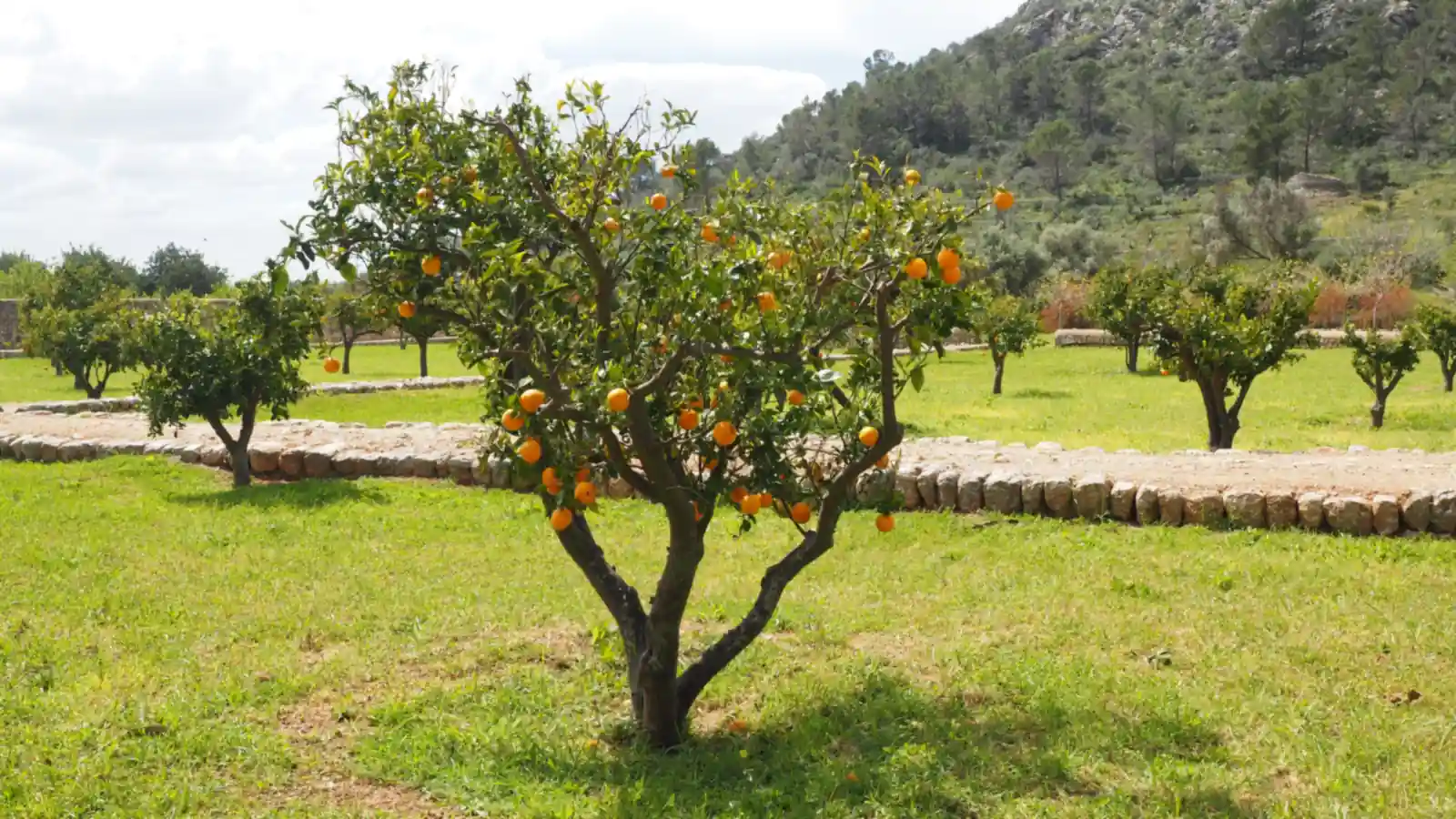
area guide - ribera alta
Living in Alzira and La Ribera Alta (2026): Orange Groves Near Valencia
Almost every family that asks me about living in Alzira and the Ribera Alta starts with the same question: how far is it from Valencia and the beach? It is a fair question. On a map, this region of orange groves, river towns and low mountains, about 40 kilometers south of the city, can look far from everything.
The answer surprises most people. From most towns you reach the center of Valencia in 40 to 50 minutes by car, the airport in about 35 and the beach at Cullera in under 40. What is harder to see from a distance is which town suits you. They lie close together but feel quite different, and the plain of the Júcar river has a flood history every buyer should know about.
So is the Ribera Alta a good place to live? In my view, no region within an hour of Valencia gives you more space for your money, in towns that are still truly Spanish, as long as you know where to look. I live in the Ribera myself. This guide covers the towns, travel times, schools, prices and the honest downsides.
IN this guide
- At a glance: travel times
- What makes the Ribera Alta different
- The towns
- Schools and healthcare
- Daily life, markets and fiestas
- Nature and the outdoors
- What homes cost
- The honest part
- Country living
- Who it suits
- FAQ
At a Glance: How Far Is Everything From Alzira and the Ribera Alta?
| Town | Valencia center | Airport | Cullera beach |
|---|---|---|---|
| Alzira | about 50 min | about 40 min | about 25 min |
| Carcaixent | about 50 min | about 40 min | about 35 min |
| Algemesí | about 45 min | about 35 min | about 25 min |
| L’Alcúdia | about 40 min | about 30 min | about 30 min |
| Guadassuar | about 45 min | about 35 min | about 30 min |
| Alberic | about 45 min | about 35 min | about 35 min |
| Carlet | about 40 min | about 30 min | about 35 min |
Driving times measured in Google Maps, October 2026. At rush hour toward Valencia, add 10 to 20 minutes.
What Makes the Ribera Alta Different
The Ribera Alta is the inland half of the Ribera, the wide and fertile plain of the Júcar river (Xúquer in Valencian) south of Valencia. Orange groves run in every direction, broken by low mountains: the Serra de Corbera and the hills of La Murta to the east, and the mountains around the Tous reservoir to the west. In spring, the whole plain smells of orange blossom.
This is farming country with a long history. Carcaixent was one of the first places in the Valencia region to grow oranges: the local priest planted the first groves there in 1781, and by 1848 the town was shipping oranges to France. Today the Ribera’s persimmons also carry their own protected origin label, Kaki Ribera del Xúquer.
Valencian is the everyday language in almost every town here (Valencian language law, Ley 4/1983, art. 35). You get by with Spanish in shops and at the town hall, but you will hear Valencian in the street, at the market and at school.
What struck me most when I moved here is that these are real, living towns, where people live and work all year round. They still hold on to their traditions and actually live them, there is hardly any tourism, and yet the cultural life is surprisingly rich.
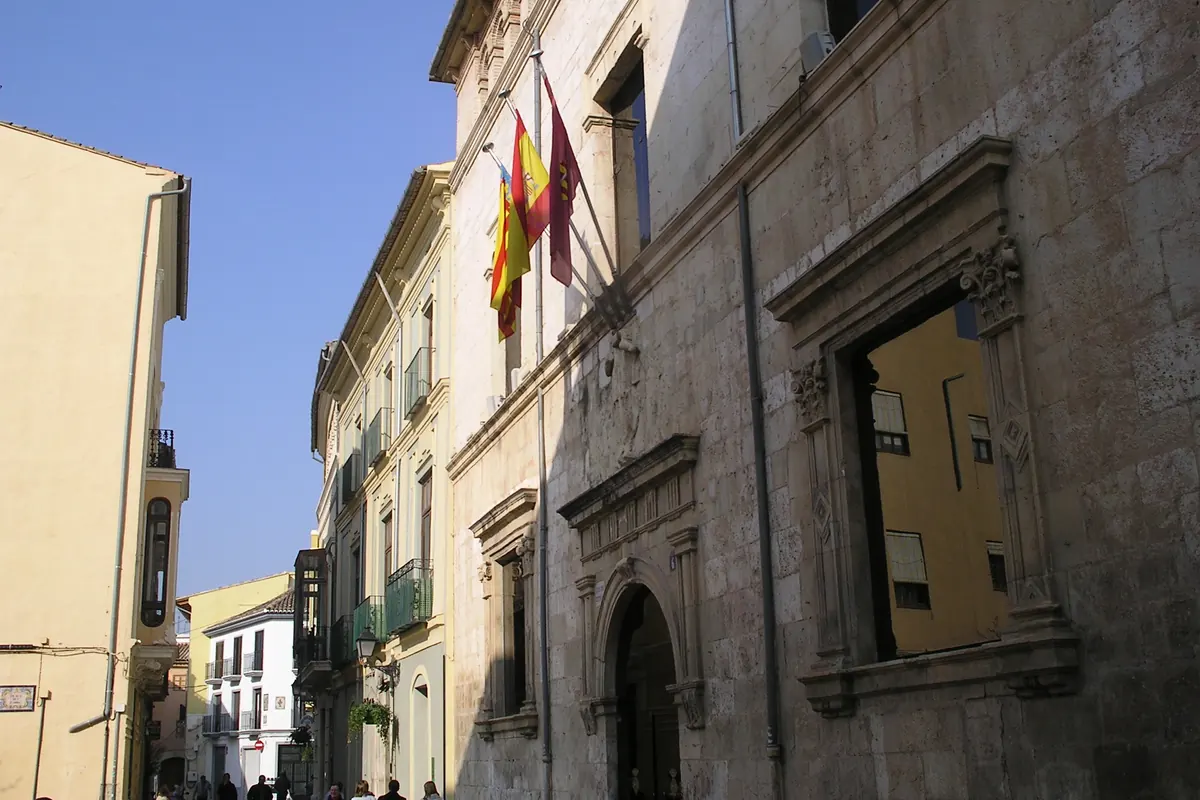
The Towns: Where to Live in the Ribera Alta
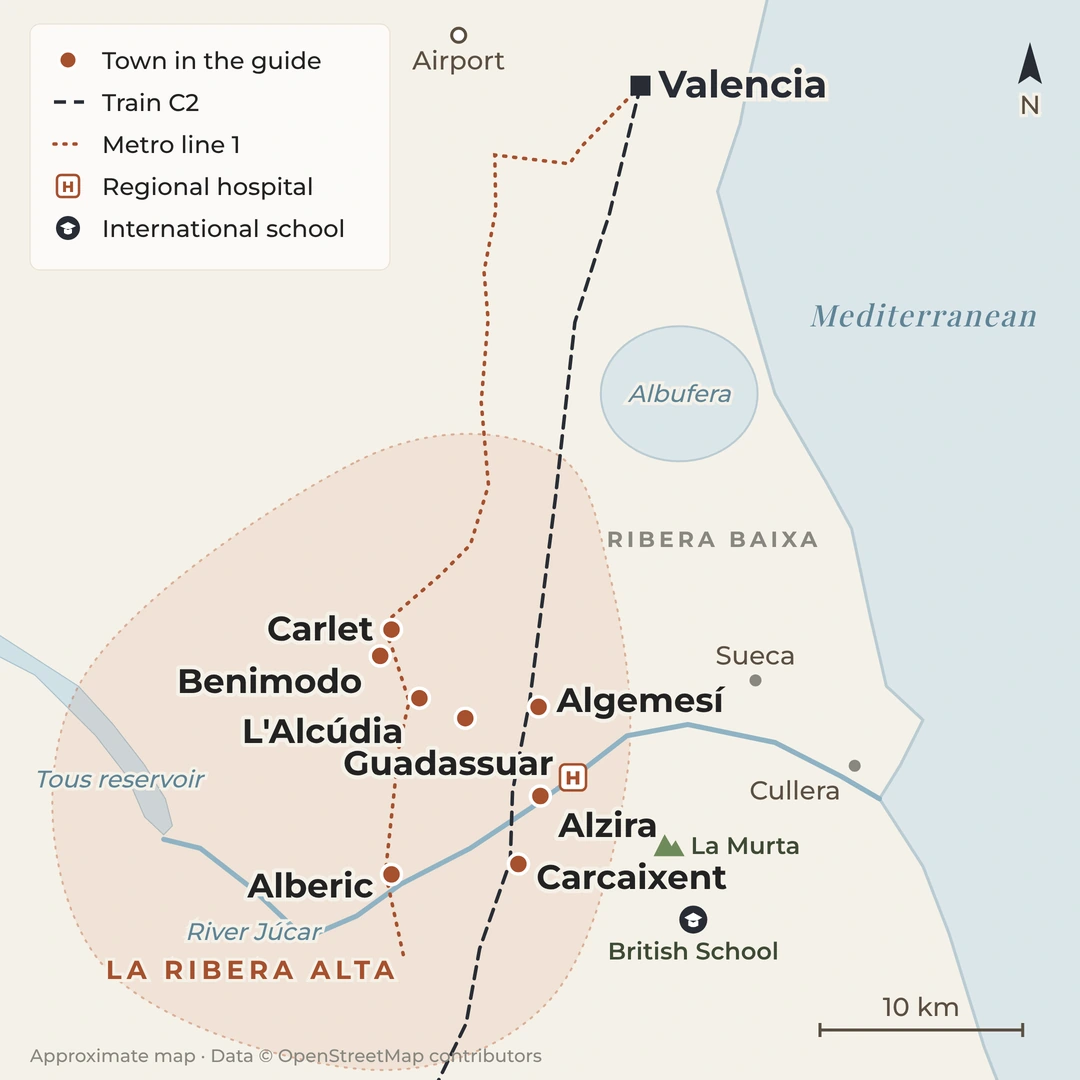
The towns lie close together, but each has its own character. Population figures are from Spain’s statistics office (INE, January 2025).
Regional capital · Hospital · Train to Valencia
Alzira
48,236 inhabitants
Alzira is the capital of the Ribera Alta and its practical center. It has the region’s public hospital, the widest choice of shops and services, a train to Valencia and a weekly market on Wednesdays. The La Murta natural area begins a few minutes outside town.
Quieter · Own station · Hills above town
Carcaixent
21,934 inhabitants
Carcaixent lies right next to Alzira, with its own station on the C2 line and the Hort de Soriano natural area in the hills above town. It is quieter than Alzira but close enough to share its hospital and shops.
Shortest train ride · UNESCO festival · Lively
Algemesí
28,306 inhabitants
Algemesí has the shortest train ride to Valencia of the three main towns, about 40 minutes, and quick access to the airport. It is best known for its September festival of the Mare de Déu de la Salut, which UNESCO lists as intangible cultural heritage.
Farming towns · Houses with land · Metro in L’Alcúdia
L’Alcúdia and Guadassuar
12,587 and 6,039
L’Alcúdia and its neighbor Guadassuar are smaller farming towns surrounded by orange groves, with more houses on their own land. L’Alcúdia is on the metro line to Valencia; in Guadassuar you rely on the car.
Up the river · Villas with large plots · Near Tous
Alberic
11,099 inhabitants
Alberic lies further up the river, on the road to Tous and its dam. It is a compact town on the metro line, with the hills around the Tous reservoir a short drive away. Between Alberic and Tous lies the San Cristóbal urbanization: detached villas, most with a pool and a large plot, often more than 2,000 square meters, and some with wide views over the valley.
Closest to Valencia · Metro line 1 · Smaller towns
Carlet and Benimodo
16,857 and 2,332
Carlet and small Benimodo sit on the western side of the plain, with L’Alcúdia the closest towns to Valencia by car: about 40 minutes to the center and 30 to the airport. Both are on metro line 1.
Toward the coast, the Ribera Baixa, with Cullera and Sueca, is rice country with beaches. It gets its own guide.
Schools and Healthcare for Families
International school
The British School of Alzira, on the road from Alzira to Tavernes, has taught the British curriculum since 1997, from Pre-Nursery to Year 13, with IGCSE and A levels. From most towns in this guide it is a 15 to 25 minute drive. Other options within reach are the British School of Xàtiva and the Colegio Internacional Ausiàs March in Picassent, which offers the International Baccalaureate.
public schools
Under the Valencian education freedom law of 2024 (Ley 1/2024), families choose whether Spanish or Valencian is the main teaching language; children learn both. In the Ribera Alta, many classmates speak Valencian at home, which helps children pick it up quickly.
hospital
The Hospital Universitario de la Ribera in Alzira is the public hospital for the whole region, with around 370 beds. It has been run directly by the regional health service since 2018.
Daily Life, Markets and Fiestas
Alzira’s big weekly market is on Wednesday and Algemesí’s on Saturday. Almost every other town has its own weekly market too.
The fiestas are where you see what I mean by living towns. Last August my teenage son spent three days at the summer festivities in Algemesí with his friends, and when I came to pick him up, I saw it for myself. Streets are closed off and filled with long tables, and people bring their own homemade sandwiches to share, with beer and wine. A temporary bullring is built for the week of bous al carrer, the traditional Valencian bull events. Unlike a bullfight, the bulls are not killed during the event; young men test their nerve by getting as close to them as they dare. It is not everyone’s idea of fun, and you are free to skip it, but it is part of village life here. In the evening there is a dance for the whole town, with a DJ.
“What struck me most is that young and old all join in, as if it is the most natural thing in the world.”

Algemesí’s September festival of the Mare de Déu de la Salut, with its human towers and processions, is on UNESCO’s list of intangible cultural heritage since 2011.
Easter is just as striking. At Easter this year I went to the Holy Week procession in Alberic. I expected something small compared with the big Spanish cities, but nothing could be further from the truth. It felt as if the whole town was taking part, and the procession went on for hours. I kept wondering where all the spectators had come from.
Fiestas also mean closed streets, music until late and fireworks. Our guide to Valencia’s fiestas and what they mean when you buy a home explains what to ask before you choose a street.
Nature and the Outdoors
La Murta and La Casella · Alzira
A protected municipal natural area of about 770 hectares, a short drive from town, with the ruins of a monastery, the rocky ridge of Les Agulles and marked trails from under 2 to about 7 kilometers. One trail is a botanical route through rare Mediterranean woodland with bay laurel and myrtle.
Serra de Corbera
The mountain range east of Alzira is a protected EU Natura 2000 site of about 4,800 hectares.
Hort de Soriano · Carcaixent
A small protected area of pine woods and springs in the hills above Carcaixent, with a visitor center.
Antella
The old river weir at Antella, in use since 1260, is where the Acequia Real del Júcar begins, the medieval canal that still waters the orange groves of the Ribera. In February 2026 the area became a protected natural area. I have walked there myself. It is a lovely place for a walk, and you see children swimming in the flowing water of the river.
Tous: my own favorite escape is the hills around the Tous reservoir. You can walk for hours on well-kept tracks in complete silence, sometimes without meeting anyone. Not long ago, two wild goats with big curved horns, what I believe were Iberian ibex, ran across the path ahead of me. Early in the morning you can also see the females, smaller, with short pointed horns.
Keep an eye on the sky as well: Bonelli’s eagles, eagle owls and peregrine falcons nest in these mountains, and wild boar live in the woods.
What Homes Cost in Alzira and the Ribera Alta
€1,000–1,250
asking price per m² in the larger towns, about half the provincial average (Idealista, Sept 2026)
€180k–350k
typical range for country houses and villas with a plot
Asking prices in the larger towns run at roughly €1,000 to €1,250 per square meter, about half the provincial average (Idealista, September 2026), though they rose sharply over the past year.
For buyers who want land, country houses and villas with a plot are regularly available in the €180,000 to €350,000 range. Prices differ a lot from street to street and plot to plot, so compare like with like: a renovated town house in Alzira and a country house outside L’Alcúdia are different markets
The Honest Part: Floods, Heat and the Car
Floods: the Júcar plain has flooded before, most famously when the Tous dam overflowed in 1982, and again during the DANA storm of October 2024. Before you buy, check the address on the official PATRICOVA flood map. Many homes are fine, but some streets and plots are not.
Heat: in Valencia city, the average high in August is about 30 °C and the average low in January about 7 °C (AEMET long-term averages). Inland, where I live, summer afternoons are noticeably hotter than on the coast, and winter nights are colder. Shade, thick walls and good air conditioning matter more here than a sea view.
The car: outside the towns on the train or metro line, you need a car for almost everything, from the school run to the supermarket.
Mosquitoes: from late spring to autumn, especially near water and irrigation channels. A good screen on every window is worth it.
Country Living: Fincas and Rural Land
Many buyers come to the Ribera for a house with land. Here a few things matter more than the view: whether the house is legal, whether the land has irrigation rights and whether it lies in a flood zone.
Good to know
In the Valencian Community, a new house on common rural land needs a plot of at least one hectare (Valencian planning law, TRLOTUP), so buying an existing legal house is usually the realistic route.
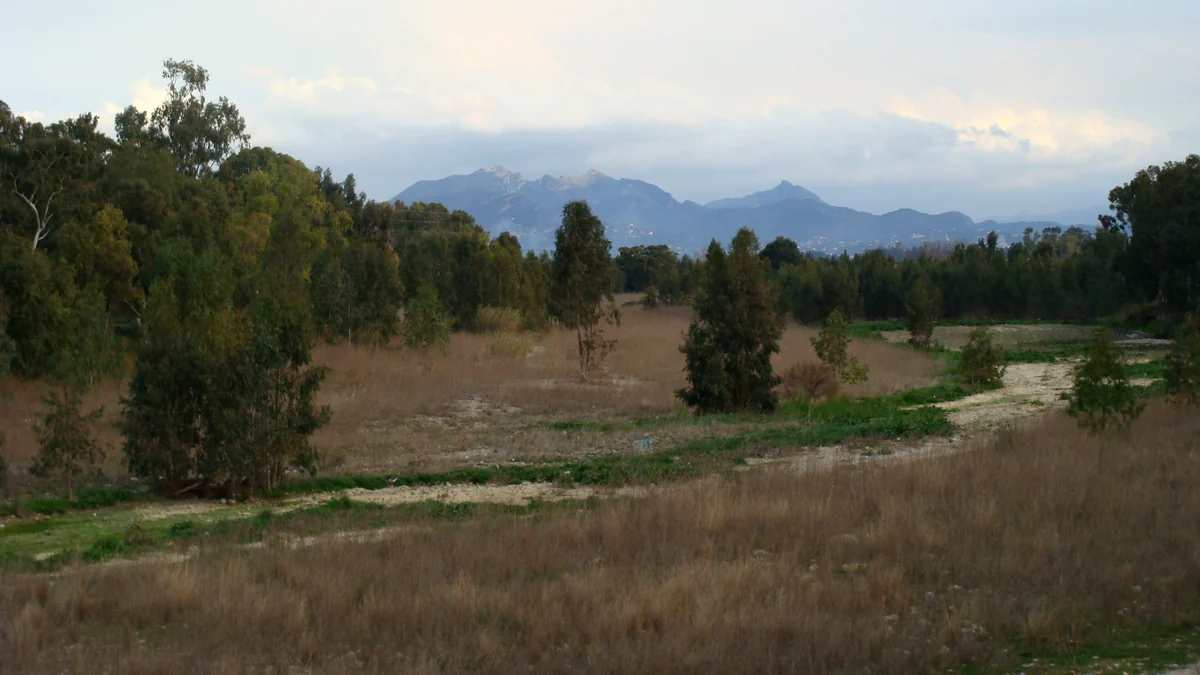
Our guide to buying a country house in Valencia explains what to check, and our guide to self-sufficient living near Valencia covers water, solar and animals.
Who Living in Alzira and the Ribera Alta Suits
families
A British school, a regional hospital and towns where children play in the street, at prices well below the city.
retirees
A quiet, affordable life with services close by, as long as you are comfortable with summer heat and some Valencian.
Commuters and remote workers
Algemesí, Alzira, Carlet and L’Alcúdia have a train or metro to Valencia.
Buyers who want land
L’Alcúdia, Guadassuar, Benimodo and the countryside around Alberic.
It suits you less if you want the beach at your door, nightlife or a life without a car. For an overview of other areas, see our guide to the best areas to buy property in Valencia.
A Region Where People Live and Work
The Ribera Alta is not a postcard. It is a working region of orange groves and real towns, half an hour to an hour from Valencia, where your money buys more space and your neighbors are there all year. Choose the town that fits your daily life, check the flood map, and you get a lot in return.
Not sure which town in the Ribera Alta suits you?
We search for you, identify the right home, check it before you make an offer, and negotiate the price. Book a free call and tell us how you want to live.
We will explain how we work and what it costs.
Frequently Asked Questions
Is Alzira a good place to live?
For families and retirees who want space and a real Spanish town within an hour of Valencia, yes. Alzira has a hospital, a train, schools and all daily services, at prices around half the provincial average. The downsides are summer heat, the need for a car outside the center and flood risk in some parts of town, so check each address on the PATRICOVA map before you buy.
How far is Alzira from Valencia and the beach?
By car about 50 minutes to the center of Valencia, 40 to the airport and 25 to the beach at Cullera, outside rush hour. The C2 train to Valencia Nord takes 45 to 55 minutes. If you plan to commute every day, Algemesí, Carlet or L’Alcúdia save you some time.
Are there international schools near Alzira?
Yes. The British School of Alzira teaches the British curriculum from Pre-Nursery to Year 13, and it is a 15 to 25 minute drive from most towns in the Ribera Alta. The British School of Xàtiva and the Colegio Internacional Ausiàs March in Picassent are also within reach. In public schools, families choose Spanish or Valencian as the main teaching language.
Does Alzira flood?
Parts of it can. The Júcar plain flooded badly in 1982 and again in October 2024. Risk differs from street to street, so the official PATRICOVA map, the ground floor level and a conversation with the neighbors tell you more than any general answer.
Do I need to speak Valencian to live in the Ribera Alta?
No. Everyone speaks Spanish, and you get by fine with it. But Valencian is the language of daily life here, and children at local schools learn it quickly. Learning a few words goes a long way with your neighbors.
Cookie Consent
Your privacy, your choice
We use cookies to understand how visitors use our site and to improve our advertising. You can accept, reject, or choose which cookies you allow.
Cookie Preferences
Choose which cookies you allow. Essential cookies are always on because the site needs them to work. You can change your choice at any time.
Essential cookies enable basic functions and are necessary for the proper function of the website.
Statistics cookies collect information anonymously. This information helps us understand how visitors use our website.
Google Analytics is a powerful tool that tracks and analyzes website traffic for informed marketing decisions.
Service URL: policies.google.com (opens in a new window)
Marketing cookies are used to follow visitors to websites. The intention is to show ads that are relevant and engaging to the individual user.
Measures the results of our Google Ads campaigns.
Service URL: policies.google.com (opens in a new window)
Live chat to answer your questions.
Service URL: www.intercom.com (opens in a new window)