

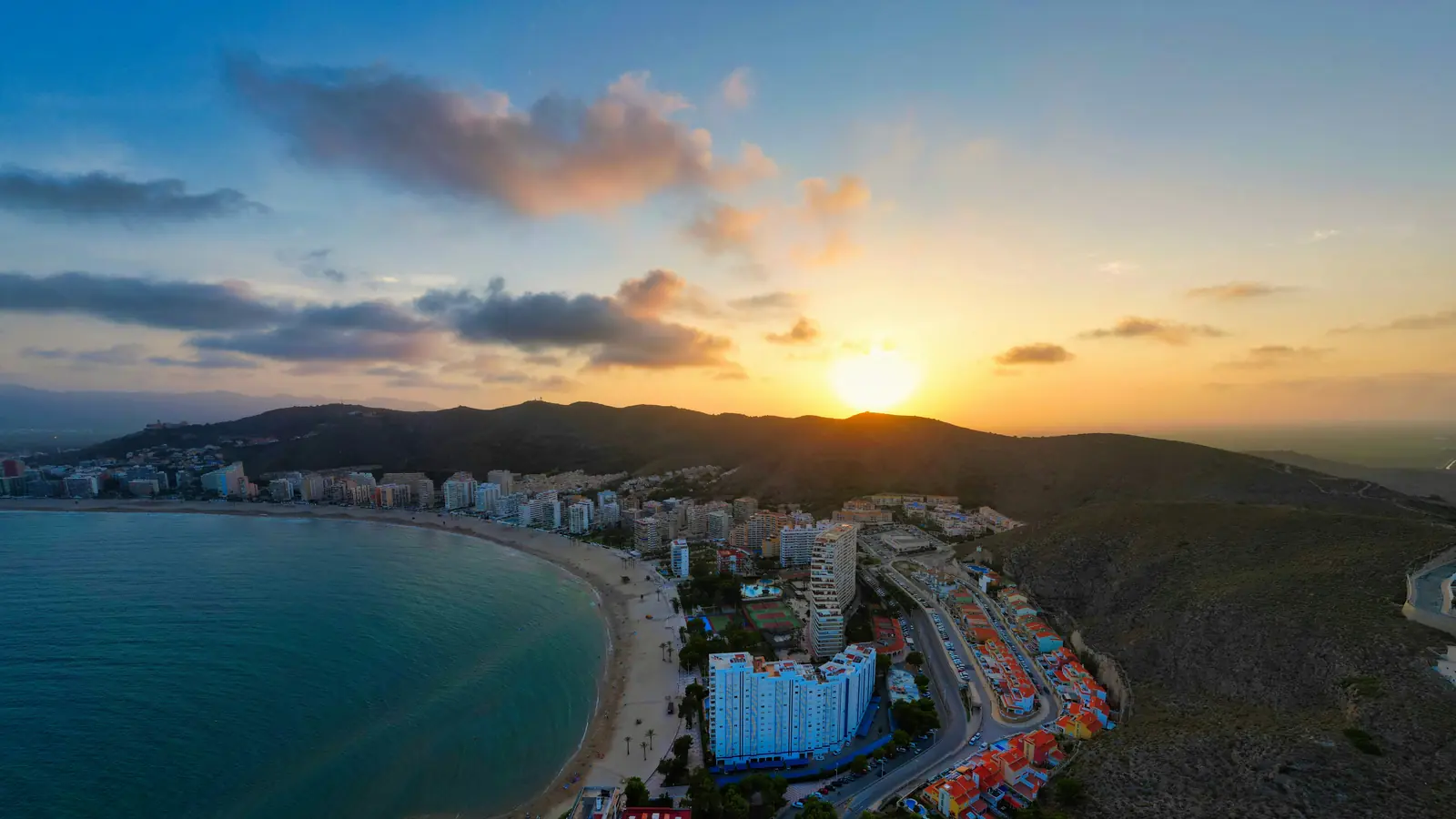
Area guide · Ribera Baixa
Living in Cullera and La Ribera Baixa (2026): Beaches, Rice Fields and Real Spanish Towns
Almost every buyer who asks me about living in Cullera starts with the same question: is it a ghost town in winter? It is a fair question. Cullera is a beach resort, and in August its population grows several times over. What happens to it in January is harder to see from a photo.
The honest answer is: partly. Along the beachfront, many apartments stand empty from October to May. But the old town, Sueca and the villages around them are lived in all year. And that is what the Ribera Baixa is really about. It is the Spain of the Spanish themselves: clean beaches, rice fields and ordinary towns, about 45 minutes from Valencia.
So is it a good place to live? In my view, it gives you the beach on your doorstep without Costa Blanca prices, as long as you choose where you want to spend the winter. I live inland, in the neighboring Ribera Alta. This guide covers the towns, travel times, schools, prices and the honest downsides.
In this guide
- At a glance: travel times
- What makes the Ribera Baixa different
- The towns
- Schools and healthcare
- Summer, winter and fiestas
- Nature and the outdoors
- What homes cost
- The honest part
- Country living
- Who it suits
- FAQ
At a Glance: How Far Is Everything From Cullera and the Ribera Baixa?
| Town | Valencia center | Airport | Nearest beach |
|---|---|---|---|
| Cullera | about 45 min | under 40 min | in town |
| Sueca | about 40 min | about 30 min | about 12 min (Les Palmeres) |
| El Perelló | about 35 min | about 30 min | in the village |
| Favara | about 45 min | about 35 min | about 12 min (Cullera) |
| Sollana | about 35 min | about 30 min | about 25 min (Cullera) |
Driving times measured in Google Maps, October 2026. At rush hour toward Valencia, add 10 to 20 minutes.
What Makes the Ribera Baixa Different
The Ribera Baixa is the coastal half of the Ribera, the plain of the Júcar river (Xúquer in Valencian) south of Valencia. Where the Ribera Alta grows oranges, the Ribera Baixa grows rice. The fields stretch from Sueca and Sollana north to the Albufera, the large freshwater lagoon whose rice fields are seen as the home of paella. At Cullera, the Júcar finally reaches the sea, below a lone hill crowned by a castle.
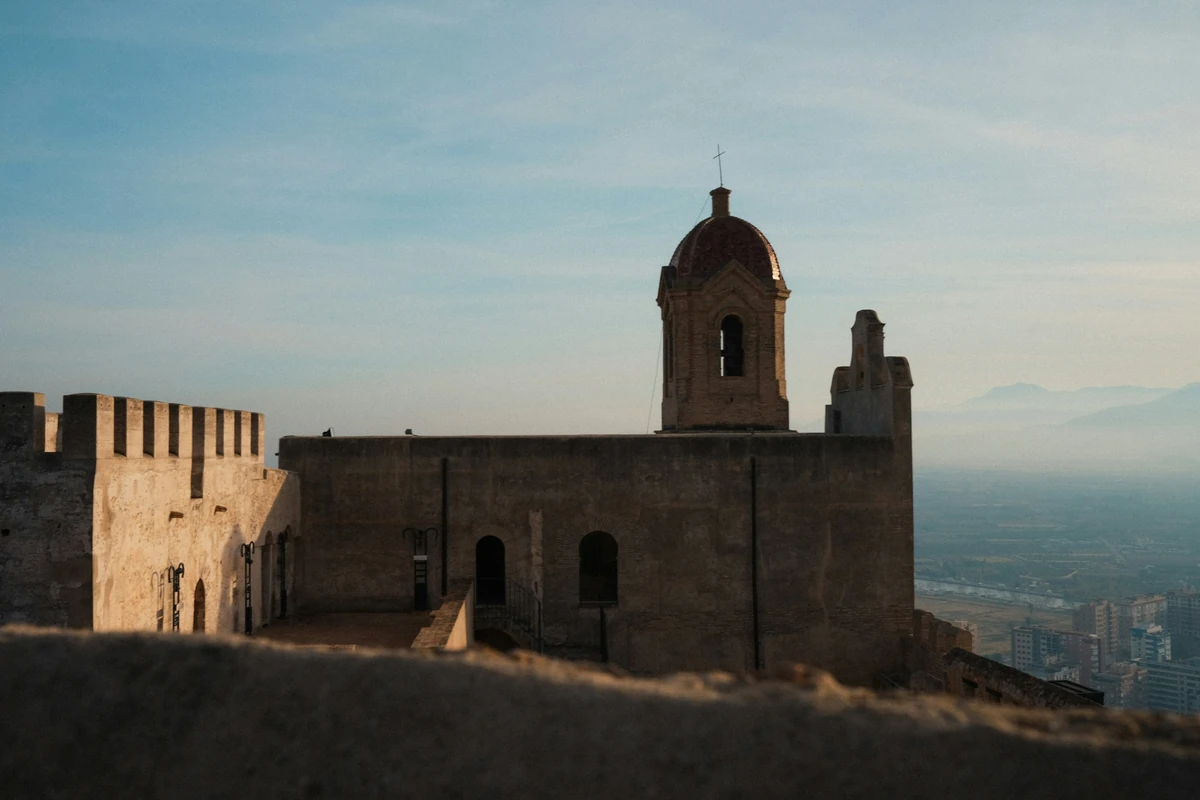
Cullera’s history is written on that hill. The castle and the old quarter beneath it guarded the river mouth for centuries, and in the 16th century the town was raided by the Barbary pirate Dragut, a story you can still visit in a cave museum by the lighthouse. Since the 1970s, Cullera has also been a summer resort for families from Valencia and Madrid.
Valencian is the everyday language in every town here (Valencian language law, Ley 4/1983, art. 35). You get by with Spanish, but you will hear Valencian in the street, at the market and at school.
This summer I spent several beach days around Cullera with my family. What struck me was how Spanish it felt: Spanish families, spotless sand and a relaxed, friendly atmosphere, a world away from the international resorts further south. If you want it even quieter, head south to El Brosquil: a calm beach with a few families, slightly coarser sand and hardly any bars or shops.
The Towns: Where to Live in the Ribera Baixa
The beach town and the towns behind it feel very different, especially in winter. Population figures are from Spain’s statistics office (INE, January 2025).
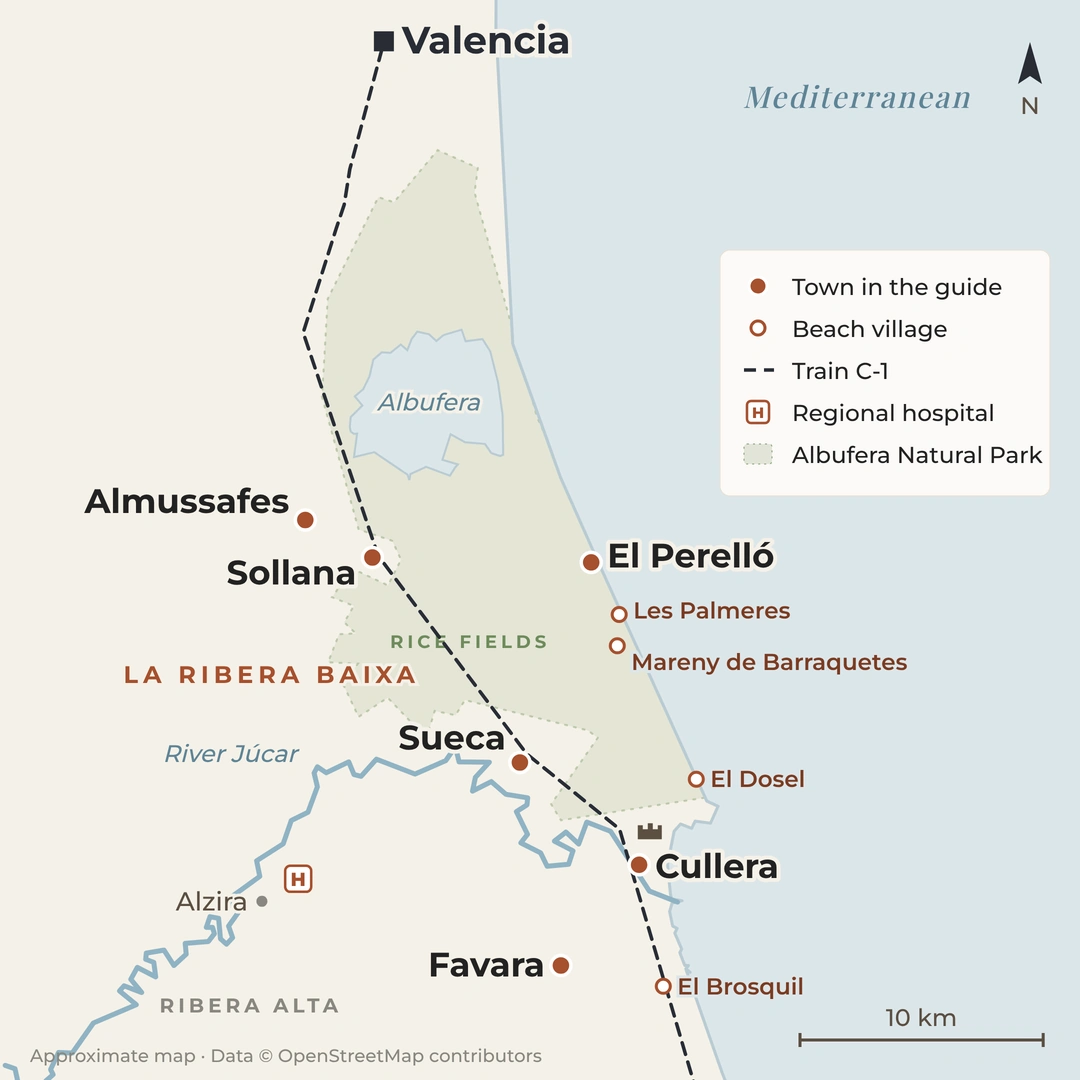
Beach town · Castle hill · Train to Valencia
Cullera
24,702 inhabitants
Cullera is the region’s beach town, with ten Blue Flag beaches, a castle on the hill and its own train station. It is really several places in one:
old town
At the foot of the hill, lived in all year, with the lowest prices.
san antoni
Along the main beach: mostly apartment blocks from the 1970s onward, busy in summer and quiet in winter.
el faro
On the headland by the lighthouse: apartments and villas with the best views, but steep streets and many steps.
El Racó
On the calm bay south of the hill: the most sought-after part of town.
Marenyet and El Dosel
North of the river: low-rise and close to the dunes.
Largest town · Never empties · Paella capital
Sueca
29,194 inhabitants
Sueca is the largest town in the region and the one that never empties. It sits among the rice fields, a few kilometers inland, with its own train station, a weekly market on Friday and a famous paella contest every September. Its beach villages, El Perelló, Les Palmeres and Mareny de Barraquetes, lie about 10 minutes away on the edge of the Albufera; El Perelló is the closest of all to Valencia.
Hill village · Sea views · Villas
Favara
2,776 inhabitants
Favara is a small village in the hills behind Cullera, about 12 minutes from the beach and from the hospital in Alzira. On the hillside above Favara and Llaurí lie urbanizations (urbanizaciones, villa developments outside the village center), such as San Sofi, where some villas look out over Cullera and the sea.
Closest to Valencia · Affordable · Commuter towns
Sollana and Almussafes
5,089 and 9,070
Sollana and Almussafes lie on the northern edge of the region, closest to Valencia: about 35 and 30 minutes to the city center by car. Sollana has a train station and borders the Albufera; Almussafes is home to Ford’s car plant.
Between them lie smaller farming villages such as Albalat de la Ribera, Polinyà de Xúquer, Riola, Fortaleny, Corbera and Llaurí, each with between 1,000 and 3,500 inhabitants. Inland, the Ribera Alta, with Alzira and its orange groves, has its own guide to living in Alzira and the Ribera Alta.
Schools and Healthcare for Families
International school
The nearest is the British School of Alzira, about 25 minutes by car from Cullera and Sueca, with the British curriculum up to A levels. Families in Sollana or Almussafes are closer to the Colegio Internacional Ausiàs March in Picassent, an International Baccalaureate (IB) school.
public schools
In public schools, parents now choose whether their child is taught mainly in Spanish or Valencian (Ley 1/2024); children learn both.
hospital
The main public hospital is the Hospital Universitari de la Ribera in Alzira, about 15 to 25 minutes by car, and every town has its own health center. Private: Vithas Aguas Vivas near Carcaixent and IMED Gandía (24-hour emergency department), both about 25 minutes from Cullera.
Living in Cullera: Summer, Winter and Fiestas
Over 50%
of all homes in Cullera are second homes (census 2011, via Turisme GVA)
~200,000
people in Cullera in summer, against 24,702 residents (University of Valencia)
Is Cullera a ghost town in winter? Partly. More than half of all homes in Cullera are second homes, one of the highest shares in Spain (census 2011, via Turisme GVA), mostly owned by Spanish families from Valencia and Madrid. From October to May many beachfront blocks are dark and some restaurants close. The old town, the market and the shops around it stay open all year, and so does Sueca. If you want neighbors in January, choose the old town, El Racó or one of the inland towns; if you want quiet, the beachfront in winter is exactly that.
In summer, Cullera’s population swells to an estimated 200,000 people (University of Valencia). In mid-August the beach also hosts the Medusa Festival, one of Spain’s largest electronic music festivals, with more than 180,000 visits over four days in 2025. When I was in Cullera this August, what surprised me was that most of the festival-goers were Spanish; in the middle of the holiday season, I had expected far more foreign tourists. It shows how lively Cullera gets in summer, and how quiet it becomes again once the season ends.
Cullera’s weekly market is on Thursday morning and Sueca’s on Friday morning.
Cullera’s biggest celebration is the nine-day festival for its patron, the Mare de Déu del Castell, which starts the Saturday after Easter. Like most Valencian towns it also celebrates the Fallas in March, when giant painted figures are burned in the streets. In September, Sueca hosts the International Valencian Paella Contest, which the regional tourist board calls the most important paella competition in the world, a fitting title for a town surrounded by rice fields. Our guide to Valencia’s fiestas and what they mean when you buy a home explains what to ask before you choose a street.
Nature and the Outdoors
La Muntanya · 233 m
Cullera’s hill, known locally as la Muntanya or the Muntanya de les Raboses, rises between the old town and the lighthouse and is part of the Albufera Natural Park, with the castle and sanctuary on top and a marked trail, the Senda de la Lloma, across it.
Ten Blue Flags · 12.7 km
Cullera’s beaches hold ten Blue Flags in 2026, a record for the town, covering 12.7 km of coast, the fifth-longest stretch of Blue Flag beach of any town in Spain (Cullera tourist office, May 2026).
Quieter beaches
North to the wilder beach of El Dosel, with its dunes, or south to El Brosquil, a calm beach that won its first Blue Flag this year but still has few bars or shops.
Albufera Natural Park
To the north, the rice fields stretch from Sueca and Sollana toward Valencia, and the Júcar meets the sea right at Cullera.
The Blue Flag is an international award, renewed every year, for beaches with clean water, lifeguards and good facilities.
What Homes Cost in Cullera and the Ribera Baixa
€2,400 / m²
average asking price in Cullera: a quarter less than Dénia, 40% less than Jávea (Idealista, Sept 2026)
€1,150–1,350
per m² inland, in Sueca, Sollana and Favara
Asking prices in Cullera average around €2,400 per square meter, roughly a quarter less than Dénia and 40% less than Jávea (Idealista, September 2026). That gap is not only a bargain; it reflects a different place. Cullera is a Spanish family resort, where most homes along the beach are apartments, not an international villa coast. The old town starts below €1,600, while El Racó, the most sought-after beachfront, is close to €3,800. Inland, in Sueca, Sollana and Favara, prices fall to €1,150–1,350.
Prices differ a lot from building to building. A sea-view apartment in a block from the 1970s and a new apartment in El Racó are different markets, so compare like with like.
The Honest Part: Winter, Floods and Old Buildings
Winter: along the beachfront, expect dark buildings and closed restaurants from October to May. For some buyers that is the whole point; for others it is lonely. Visit in January before you decide.
Floods: the Júcar reaches the sea at Cullera, and during the DANA storm of October 2024 it broke its banks in several towns along its lower course, including Sueca and Cullera. The river defenses have since been rebuilt and raised. Before you buy, check the address on the official PATRICOVA flood map. The old towns and the hillside sit higher; low-lying areas near the river mouth and the rice fields carry more risk, so check those addresses with extra care.
Older buildings: many beachfront blocks went up during the resort boom from the 1970s onward. Check the state of the building, the elevator (lift) and the monthly community fees (gastos de comunidad, the shared costs of the building) before you fall for the view.
Summer crowds: in July and August, parking is hard to find and the promenade is packed.
Mosquitoes: with the rice fields and the Albufera nearby, expect them in summer, especially at dusk and close to the fields. A good screen on every window is worth it.
Country Living: Rice Fields and Rural Land
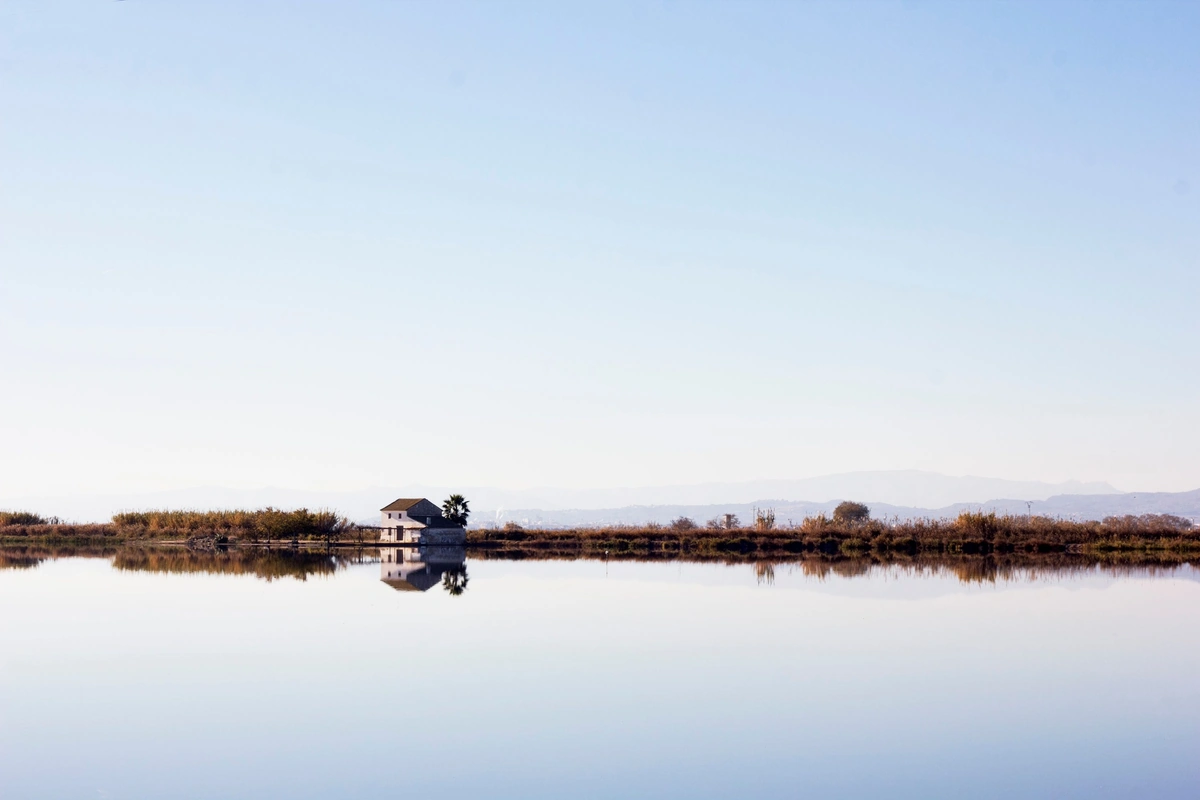
The rice fields look like open space, but they are farmland, and much of the land around the Albufera lies inside a protected natural park with its own planning rules.
Good to know
In the Valencian Community, a new house on common rural land needs a plot of at least one hectare (Valencian planning law, TRLOTUP), so buying an existing legal house is usually the realistic route.
For houses with land, the hills around Favara and the neighboring Ribera Alta offer more choice. Our guide to buying a country house in Valencia explains what to check, and our guide to self-sufficient living near Valencia covers water, solar and animals.
Who Living in Cullera and the Ribera Baixa Suits
Beach lovers on a budget
The sea at your door for far less than the Costa Blanca.
Holiday-home buyers
An apartment on the beachfront in Cullera or a house in El Perelló, close enough to Valencia for weekends.
Year-round residents and retirees
The old town of Cullera, El Racó or Sueca, where life goes on in winter.
Commuters
Sollana, Sueca and Cullera have a train to Valencia; Almussafes and Sollana are closest by car.
It suits you less if you want an international community, a villa coast or a lively beachfront in January. For an overview of other areas, see our guide to the best areas to buy property in Valencia.
A Beach Region Where the Spanish Live
The Ribera Baixa is not the Costa Blanca, and that is its strength. It is a region of clean beaches, rice fields and real towns, about 45 minutes from Valencia, where your money still buys a home near the sea. Choose where you want to spend the winter, check the flood map, and you get a lot in return.
Not sure where in the Ribera Baixa suits you?
We search for you, identify the right home, check it before you make an offer, and negotiate the price. Book a free call and tell us how you want to live.
We will explain how we work and what it costs
Frequently Asked Questions
Is Cullera a good place to live?
For buyers who want the beach at their door without Costa Blanca prices, yes. Cullera has a train to Valencia, a castle hill, ten Blue Flag beaches and prices around €2,400 per square meter. The downsides are a quiet beachfront in winter, crowds in summer and flood risk in low-lying areas, so choose the part of town that fits how you want to live.
Is Cullera empty in winter?
The beachfront largely is: more than half of all homes in Cullera are second homes. The old town, El Racó and nearby Sueca are lived in all year, with shops, markets and schools open.
How far is Cullera from Valencia?
About 45 minutes by car to the center of Valencia and under 40 minutes to the airport, outside rush hour. The C-1 train to Valencia’s Estació del Nord takes about 45 to 50 minutes.
Does Cullera flood?
Parts of it can. The Júcar broke its banks along its lower course during the DANA storm of October 2024. Risk differs from street to street, so check the official PATRICOVA map before you buy; the old town and the hillside sit higher than the areas near the river mouth.
What does an apartment in Cullera cost?
Asking prices average around €2,400 per square meter (Idealista, September 2026), from under €1,600 in the old town to close to €3,800 in El Racó. Inland towns such as Sueca and Favara are cheaper.
Is Sueca a good place to live?
Yes, if you want a real Spanish town that stays lively all year. Sueca has a train to Valencia, daily services and its own beach villages about 10 minutes away, at lower prices than Cullera.
Are there international schools near Cullera?
The nearest is the British School of Alzira, about 25 minutes by car. Families on the Valencia side of the region can also look at the Colegio Internacional Ausiàs March in Picassent.
Cookie Consent
Your privacy, your choice
We use cookies to understand how visitors use our site and to improve our advertising. You can accept, reject, or choose which cookies you allow.
Cookie Preferences
Choose which cookies you allow. Essential cookies are always on because the site needs them to work. You can change your choice at any time.
Essential cookies enable basic functions and are necessary for the proper function of the website.
Statistics cookies collect information anonymously. This information helps us understand how visitors use our website.
Google Analytics is a powerful tool that tracks and analyzes website traffic for informed marketing decisions.
Service URL: policies.google.com (opens in a new window)
Marketing cookies are used to follow visitors to websites. The intention is to show ads that are relevant and engaging to the individual user.
Measures the results of our Google Ads campaigns.
Service URL: policies.google.com (opens in a new window)
Live chat to answer your questions.
Service URL: www.intercom.com (opens in a new window)